Saturday, 3 December 2016

An Unlikely Face Off !


The European Robin, re-established as our national bird earlier this year, often seen in the woodlands, a garden favourite and often taken for granted.
 Life appears harder for the Robin in the marshlands where food supply is scarcer to find in these cold winter months.


Here's a pictorial observation of a plucky little Robin made the other day, after a particularly cold and frosty night.

The so called arena was a feeding station in the reedbed adjacent to the woodland at Rainham RSPB.
a good place to sit awhile and watch the birds coming and going, Greenfinch,Goldfinch, Reed Buntings, Dunnock, Collared Dove, Great Tit, Blue Tit, occasionally a Great Spotted Woodpecker arrives, and last year a Water Rail was seen feeding around the base of the feeders. But today's life struggle was this brave little Robin which caught my eye.


This Robin stationed itself on a convenient perch next to the feeder, being a ground feeder it didn't try and take seeds from the feeder itself, it was more interested in the spillage at the base of the feeder, which it made claim to, occasionally chasing away the female Buntings and Dunnocks.


Now I know that the Robin has a reputation for being a bit feisty to other Robins, especially when defending a territory, but this was even a very brave Robin or very foolish. I remembered a blog from Rainham last year of a Brown Rat attacking a Starling and dragging the unfortunate bird down a hole screaming.


 A Brown Rat slunk in from the shadows,  surprisingly the Robin held its ground, the Brown Rat edged ever closer, the Robin stared back, a face off , no one was giving ground, the Rat appeared massive against the Robin's tiny frame.


As the Brown Rat tentatively started to nibble at the spilt grain, the Robin edged closer, I had a bad feeling that this was not going to end well. The Robin was very agitated


Time after time the feisty little Robin launched into an attack on the Rat, each time the Rat would scurry off, only to return  a few seconds later.


                           Each time the Rat would scurry off, only to return  a few seconds later.


Just when it appeared that the Robin had driven the Brown Rat away


He returned with reinforcements !


At least the Robin lived to fight another day.

Tuesday, 22 November 2016

Winter Marshes !

 It's been awhile since I have managed to get out for some wildlife watching, so with a decent weather forecast I had set my sights on a session at Rainham RSPB  just across the river in Essex, but once again I was thwarted in my attempt by the horrendous traffic delays at the Dartford Crossing, the traffic information boards were warning of 20 minute delays.
 I just can't do traffic jams these days, so luckily I managed to take the slip road before the jam and was quickly heading in the opposite direction on an open road towards the North Kent marshes on Sheppey.
As I moved along the free flowing road towards Sheppey I tried to recall the bird possibilities reported of late, there were the Snow Buntings at Shellness, an elusive Richard's Pipit, a distant Crane,  always a chance of seeing some Short Eared Owls, maybe a Barn Owl, Harriers are always seen but recently a couple of Hen Harriers have been reported, I was feeling optimistic but time would tell if I made the wrong decision.

I decided to park up at Leysdown and walk down towards Shellness Hamlet in search of the Snow Buntings. Here's a view of the Wind Pump with the Swale nature reserve in the background


The tide was nearly in on my arrival, the usual Waders were seen Redshank, Oystercatcher, Turnstones, Ringed Plover , just two Sandlings were nice to see. and a flock of Brent Geese my first sighting this year.

Ringed Plover and Winter plumaged Sandling

Redshank

Oystercatchers and Brent Geese

Turnstone

There was also a large flock of Golden plover roosting on the fields, good numbers of Black Headed Gull and a few Common Gulls milling around.

As I approached the saltmarsh opposite Shellness Hamlet, a Pipit flew up and landed close by as if to check me out, try as I might, I could not turn this into the Richard's Pipit, just a Meadow Pipit.

Meadow Pipit
A walk out to the point did not reveal the hoped for Snow Buntings, but Winter has only just arrived so plenty of time to look for them later.
Out on the Saltmarsh a few Little Egrets could be seen, but the seven Short Eared Owls that another observer had reported were keeping their heads down for me. I headed back to the car and moved on to Capel Fleet, huge numbers of Coot were gathering must've been well over two hundred, always seem strange to see them together in these numbers and tolerating each others company.

A raft of Coot

A female Kestrel on the roadside wires searching for a meal gave me some nice photo opportunities, although not the hovering pose I am trying to get, smart bird though.


Other birds seen in this area were Red Legged Partridge, Pheasant, a male and female Marsh Harrier, Corn Buntings and huge flocks of Starlings, these were feeding on the spilt grain along the road. The Common Crane was in attendance, but a distant speck on the horison.

Starlings feeding on spilt grain

Corn Buntings
I headed over to Elmley lots of Buzzards on view, many varied plumages always a little distant for my lens but always a spectacular bird to photograph.


No sign of any Short Eared Owls or Harriers, the only other bird of note for me was this Stonechat

Stonechat

Dusk was approaching so I thought I would return to Capel Fleet in the hope of a Barn Owl sighting. But as the sun went down,  it was a no show for the owls, some nice sunset views though, so not a bad day in the end as I headed home.


Saturday, 19 November 2016

" Windhover "

The "Windhover"  an appropriate name sometimes given to this superb looking Kestrel, and it's not hard to understand how this small hawk got this nickname. It's a familiar sight in open country, often seen poised hovering over a motorway verge, seemingly motionless before it plunges down into the grass on an unsuspecting victim.
 I believe its favoured food is the Short tailed vole, but I have seen them eating lizards, its rumoured they will also take small birds but that's something I have never witnessed as yet.

Whenever I see one, I am always tempted to try and get that classic photograph of the Kestrel in mid hover, never seems to work for me, just can't get close enough for a detailed shot, usually as I try to edge closer and closer they suddenly glide off in the opposite direction to take up that classic pose once again just out of camera range.

A brief encounter the other day at Rainham gave me a short window of opportunity, I managed to get the photograph of the pose but too distant and cropping the photograph didn't really help.
So this is the pose I'm after, preferably a male, but the female's quite attractive too, in mid-hover and close enough to get some detail.

The European Kestrel (Falco tinnunculus)


I did manage to get quite a few of the headless shots, reminiscent of the headless illustration shown in Reverend Francis Orpen Morris  volumes  History of British Birds.


I love reading these old bird references, quite dated now as they were first published around 1850, the wood engraved illustrations always appear out of proportion when compared to today's standards, but they have a certain charm to them which I really admire. 
The print of the Kestrel that appeared in the volume at the time caused some controversy and discussion because it appeared to show a "headless bird " but this was a genuine attempt to portray the bird in a life-like manner, see my photograph.


Here's a paragraph taken from the text of Reverend Francis Orpen Morris  volumes  History of British Birds. in which he quotes an interesting and rather shocking reference to the Kestrel

These birds appear to be of a pugnacious disposition. J. W. G. Spicer, Esq., of Esher Place, Surrey, writing in the 'Zoologist,' pages 654-5, says, 'all of a sudden, from two trees near me, and about fifty yards apart, two Hawks rushed simultaneously at each other, and began fighting most furiously, screaming and tumbling over and over in the air. I fired and shot them both, and they were so firmly grappled together by their talons, that I could hardly separate them, though dead. They were both hen Kestrels. 

Fortunately we now have camera's to record such events instead of blasting them out of the sky.

 My quest for that perfect shot ( photograph ) continues along with many others.

Tuesday, 25 October 2016

The Autumn Pear Tree !

It's been a long hot summer here in the south, and as the season moves into Autumn, a variety of birds are starting to revisit the feeding station around the Pear tree.
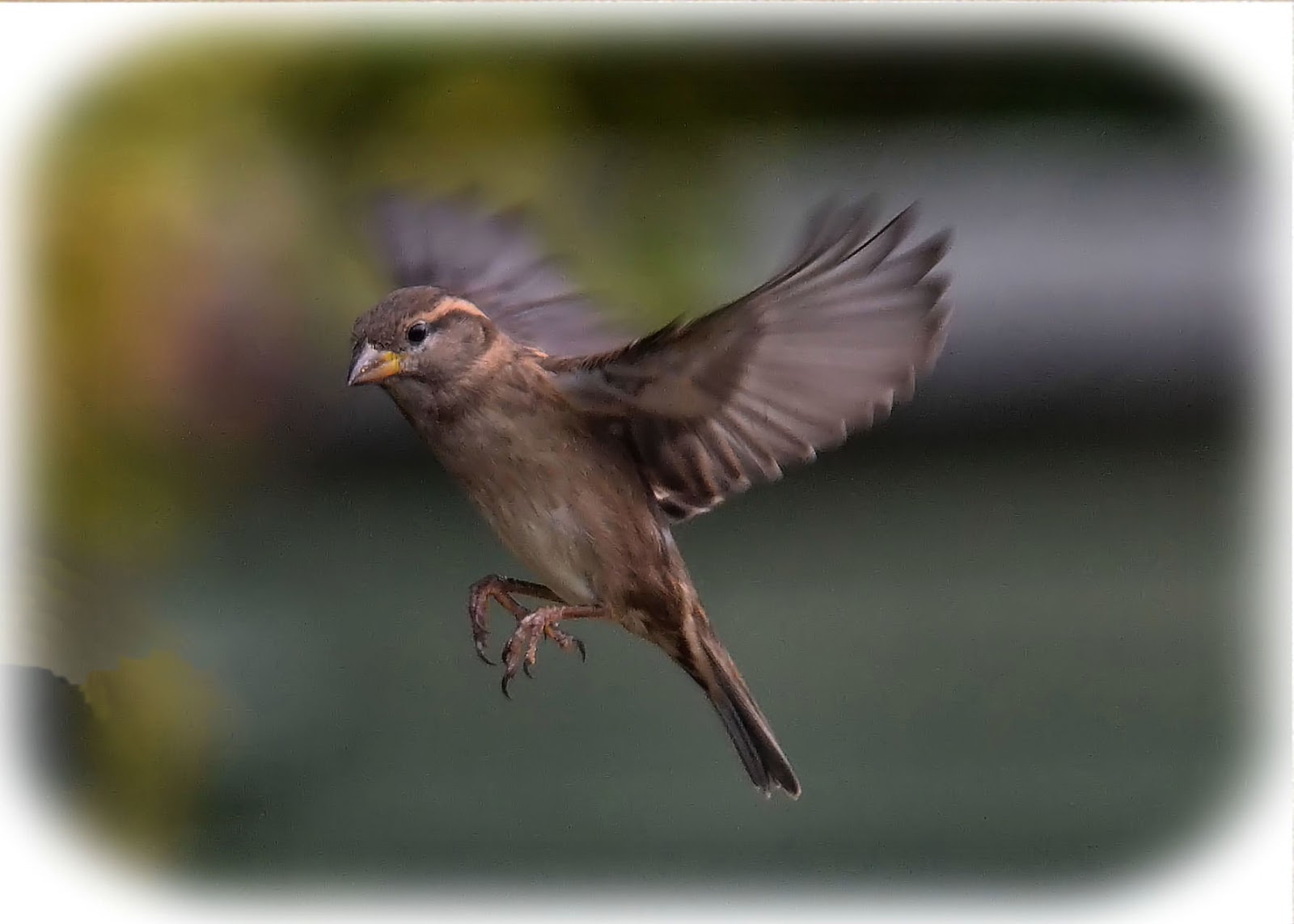
  The decision to keep the feeders well stocked through the summer months has certainly paid dividends for the local House Sparrow population, a regular flock of up to twenty six individuals has spent a lot of time around the garden, sunflower hearts a particular favorite, the pond providing a favoured bathing option and an ivy covered tree providing a safe nightly roosting spot.
 A Dunnock has been seen occasionally skulking around the back of the pond.


House Sparrows
The pear tree crop has been very poor this year, probably due to the attention the Ring necked Parakeets paid to it in the early summer months when the young pear buds were decimated, but as most of the pears are usally unreachable I can't complain, we love watching the antics of the Parakeets as they arrive on the pear tree, can't imagine the garden without them now.


Ring Necked Parakeet

The Goldfinches are returning to the feeders in higher numbers now, always appearing quite aggressive to each other as they bump each other off the feeding perches .


Goldfinches 
Greenfinches and Chaffinch have been very scarce and are only now starting to return to the garden feeders. a few female Chaffinch have been seen on the feeders, I expect there numbers to increase now as there food supplies get harder to access.


Most of the Starlings have now transformed into there adult plumage looking very smart in the sunlight, adolescent squabbling still continues.

Starlings
The Juvenile Robins of the summer appeared to have dispersed with just one Robin remaining seen most days.

Robin
Not since last winter has the Great Spotted Woodpecker been seen, but now revisiting and seen twice now on the Pear Tree and the peanut feeders, a welcome return.

Great Spotted Woodpecker

Daily visits by a pair of Great Tits continue, with Blue Tits not far behind.


Several Blackbirds still chasing each other around the garden,  the collared doves appear very territorial with some very aggressive  behaviour shown to intruders to the garden I presume.
Carrion crows are using the uppermost branches as an observation post before they launch there aerial attacks on the passing magpies,  I have heard Jackdaws calling as they pass over the garden, apart from one alighting on the roof chimney none have ventured into the garden.
the windfall apples have not attracted any Blackcaps yet, these usally appear at some point in the winter months.

The ivy in the garden has attracted large numbers of Bees, especially Ivy Bees, a few late unidentified Bumblebee Queens have been seen. When the sun shines up to three Red Admirals have appeared around the ivy, but temperatures are dropping fast now.


This young mouse has managed to find away onto the feeders using its " mission impossible skills"  my wife will not be happy with this visitor so a few more hazards required to discourage him.


I am hoping for some more unusual visitors to the Pear tree this year, as autumn turns into winter.
and my new observation post brings me closer to the feeders.